
Harvard Outreach Newsletter
155th Issue, July 2026
In this issue:
- Applying to US colleges this autumn? Start your applications NOW
- Common Application Form
- School documents
- Making the most of summer 2026
- Turning the Tide in 2026
- Intellectual Vitality initiative
Applying to US colleges this autumn? Start your applications NOW
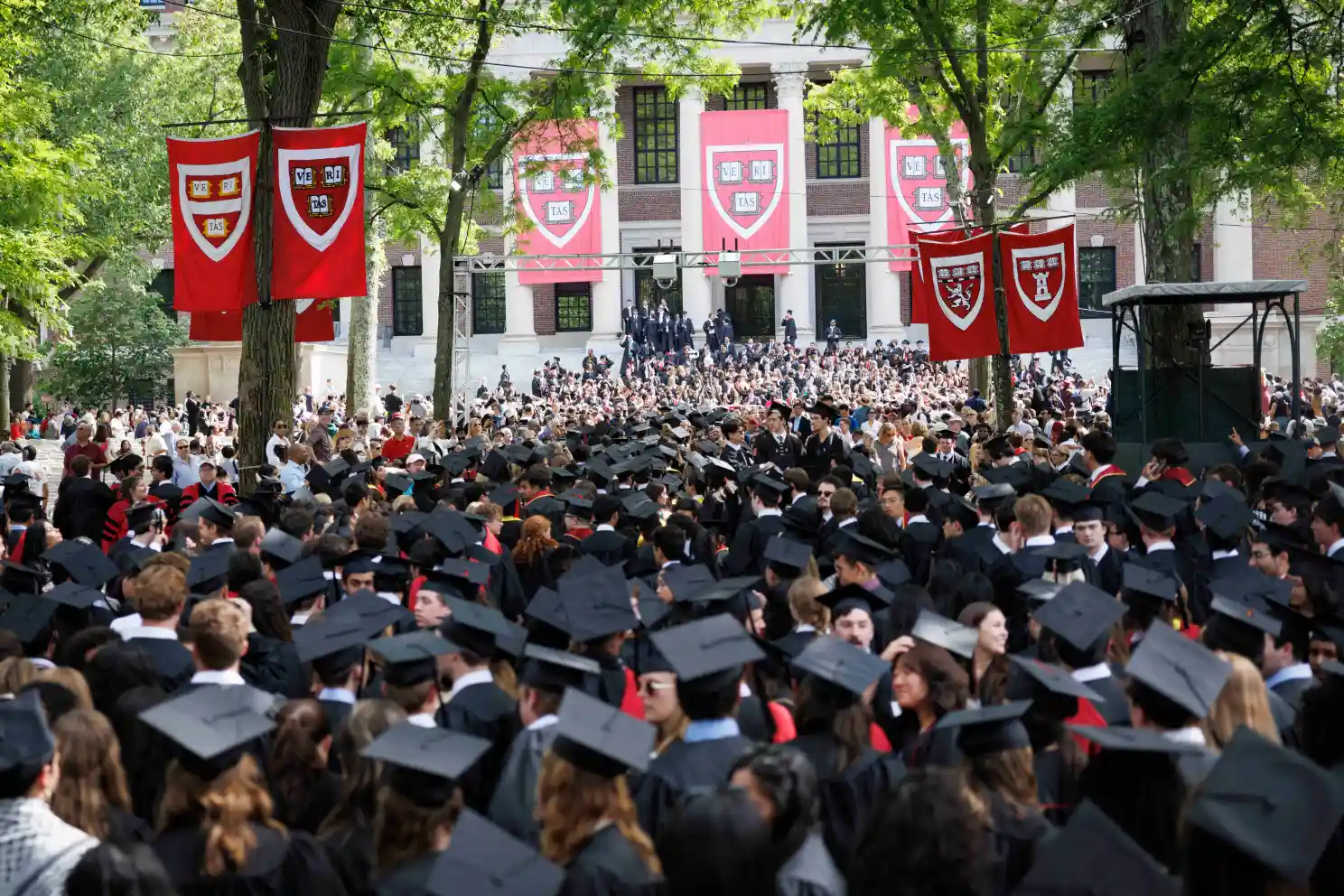
The July and August newsletters are published close together as they are particularly relevant to students who will be applying to US colleges this autumn for entry in August 2027 (Class of 2031).
Most of the information in both newsletters is directed at students who are at the end of the following year groups:
Year 12 (England and Wales)
S5 (Scotland)
Year 13 (Northern Ireland)
The July newsletter shows you how to use the Common Application Form, or ‘Common App,’ – the main method of applying to US colleges (although some institutions, such as MIT, have their own individual application forms). The August issue, published on the 1st of the month, will focus on the differences between the US and UK university application systems, and guidelines about how to write a US-style student essay (the equivalent of the UCAS Personal Statement).
If you intend to apply to study in the US next year, the best time to put together your application is between now and September. The summer holidays are the ideal time to put together as much of your application as possible. When you start the autumn term you will be very busy with your UCAS applications, so the more of your American application materials you can compile beforehand, the better.
See below for more information about the Common App, together with links to the relevant web pages.

Although not all US colleges accept the Common App, it is nevertheless used by over 1,100 institutions, including all the top research universities, so most applicants are likely to use this method. The Common App goes live each year on 1st August, although students may register and complete the general application components before this date. Click here to create an account.
For students, the Common App website contains an Application Guide for first-year students (i.e. students currently in secondary school who will be applying for full-time undergraduate study for the first time).

It starts with a video entitled What is Common App? and goes on to provide information about the following topics:
- Gather materials – the information you’ll need to complete your applications.
- Create an account – get started at any time.
- Add colleges – start building your My Colleges
- Engage supporters – collaborate with teachers, advisors and more.
- Understanding requirements – keep track of each college’s unique application requirements.
- Plan essays – organise and plan for your writing prompts.
- Submit your application – review and submit your application.
Approximately two-thirds of Common Application member colleges also have their own supplements which require short pieces of writing in addition to the personal essay in the main Common App. The supplements are unique for each individual college and are located within the ‘My Colleges’ section of the form. You may wish to check the supplement section for each college you’re applying to and consider all the essays and the personal essay together to ensure you are not repeating yourself and that the various pieces of writing complement each other.
For first-year applicants, teachers, and university advisors there is also a First-year toolkit.
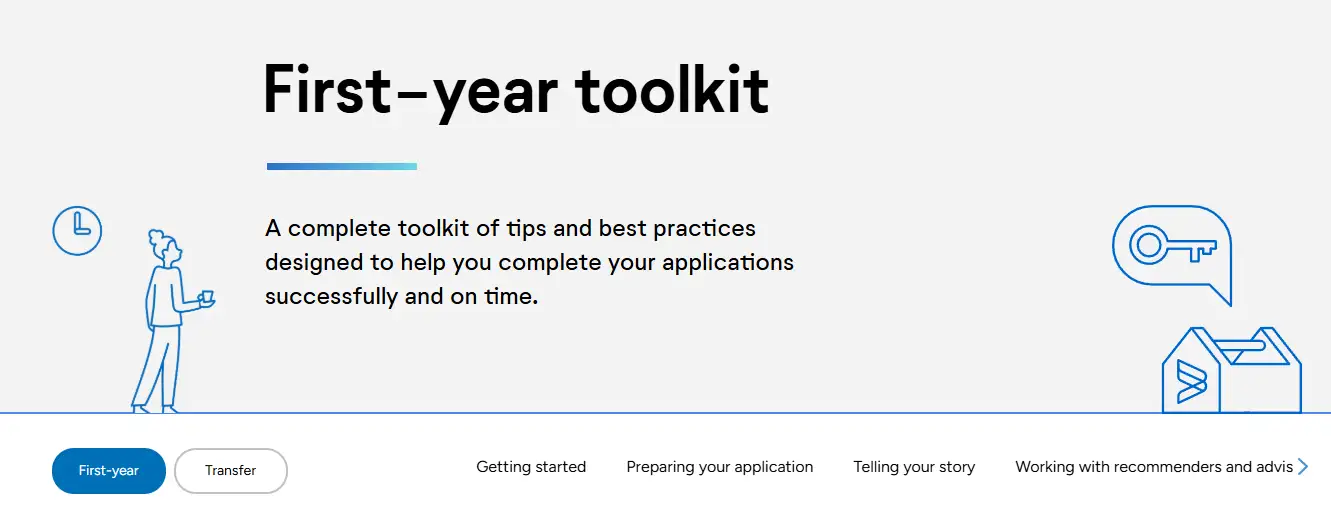
The toolkit has tips and best practices designed to help students complete their applications successfully and on time. Each section has additional resources in the form of PDF downloads to provide help with specific topics:
- Getting started – getting to know the Common App and how the application works.
- Preparing your application* – resources on getting organised and starting your application on the right track.
- Telling your story – use the different features of the application to highlight what makes you unique.
- Working with recommenders and advisors – learn how to find and communicate with your support network.
- Paying for college – learn about application fees, fee waivers, and how to find scholarships. (Also see the sections on financial aid in the February 2026 edition of this newsletter).
*Note that the PDF document ‘High School Details Information Sheet’ that you can download from the ‘Preparing your application’ section is not suitable for a UK secondary school. See ‘School Documents’ below for access to a suitable template.
For recommenders/referees (who might be Head Teachers, Heads of Sixth Form, teachers or university advisers) the Common App website contains a Recommender Guide for those who need to provide recommendations or references within the Common App system.

The guide includes:
- Get started – create an account to begin completing recommender forms in the Common App.
- Learn about the system – take a tour and learn more about how the system works.
- Complete forms – learn what information you’ll be asked to provide about your students.
- Submit forms – learn how you can submit forms and how they get to colleges.
School Documents
Schools will need to supply a School Profile and School Transcript to all the US colleges to which a student has applied.
The purpose of the School Profile is to place your school in the context of other UK institutions. The US/UK Fulbright Commission website states that in general, it can include:
- Type of school (in the USA, ‘public’ means state funded, and academies are comparable to charter schools)
- Admissions process, if applicable
- School history and cultural/local information
- School ethos, mission statement or ideology
- Quotes from inspection reports or the press
- League table position (especially important if the school is ranked low but your grades are excellent)
- Student body (demographics, single sex or mixed, class size etc.)
- Percentage of university enrolment (broken down by Oxbridge, Russell Group etc., if possible)
- If your school ranks pupils by performance or not (this is common in the USA, so readers will expect your class rank if there is no explanation)
If you need a School Profile template, you can download one from the page headed ‘Step 3 – Applying for an undergraduate degree‘ on the US/UK Fulbright Commission website. Scroll down the page until you come to ‘School documents’ and then scroll down further until you come to the downloadable ‘EdUSA School Profile Template.’
The School Transcript is the official record of a student’s secondary school grades. The US/UK Fulbright Commission provides separate templates for the different exam systems used in the UK:
- Transcript template for students sitting A levels
- Transcript template for students sitting a combination of AS and A levels
- Transcript template for IB students
- Transcript template for Northern Irish students
- Transcript template for Scottish students
- Transcript template for Welsh students
As with the School Profile, the relevant School Transcript template can also be accessed from the US/UK Fulbright Commission website on the page headed ‘Step 3 – Applying for an undergraduate degree.’ Scroll down the page until you come to ‘School documents’ and then scroll down further until you see the six downloadable templates listed above.
Making the Most of Summer 2026
If you are at the end of Year 11 or 12 (England and Wales), S4 or S5 (Scotland), or Year 12 or 13 (N. Ireland), you can use the summer holidays to enhance your enrichment activity profile in a way that will benefit your university applications both in the UK and the US. Given that nearly all students applying to top US colleges will be very accomplished academically, it is often your additional interests and achievements that will make the difference between being offered a place or not.
You could do this by undertaking:
- an internship or work experience in an area related to your potential future career
- community service or other extracurricular activity that you have set up through your own initiative
- a mini research project related to an area of interest, again that you have set up through your own initiative
- a masterclass at a local university in a subject that interests you
If you are someone who only has limited opportunities for these activities – for example, if you are committed to paid work or family responsibilities – why not keep a journal of your observations and experiences during that time? Such careful thinking and reflection might well turn into the inspiration for your application essay (which we will be considering in more detail in next month’s newsletter).
More ideas for UK students can be found in this article on the Prospects website: ‘How to make the most of the summer break.’
Turning the Tide in 2026

Since 2016, the Harvard Graduate School of Education has been leading a project called “Making Caring Common (MCC)” in collaboration with over 150 college admissions leaders across the country, which emphasises the importance of “meaningful ethical and academic engagement in high school students.”
Last month (June 2026), the MCC published its latest report, “Turning the Tide in 2026 – Preparing Students for Lives of Caring and Purpose.”
The new report states in its introduction that since 2016: “…troubling trends that have long simmered in American life have come to a boil. Research shows that far too many of us are unwilling or unable to talk constructively across our differences…Fueled by the daily shout shows and nonstop social media hostility, we retreat into corners and cartoon and demonize those with different political and moral views.”
The report makes the case for a key shift in college admissions, which it argues should: “…elevate the key ethical and civic capacities at the heart of repairing what divides us, our democracy, and our collective well-being.”
Accompanying the report is a “Sharing Toolkit” with links to resource material to promote the project.


Thematically related to ‘Making Caring Common’ is another Havard initiative: ‘Intellectual Vitality’ (IV).
In the early 2020s, a group of Harvard College students came together to reflect on campus climate and the importance of fostering a culture of respectful dialogue and mutual understanding – values essential not only for students, but for the entire College community.
These conversations led to the development of the following statement:
“Members of the Harvard College community affirm the value of intellectual vitality – meaning, a spirit of open and rigorous inquiry. To this end, we believe that our community is best served through the charitable exchange of ideas, where we take as given one another’s best intentions and treat each other as partners in the pursuit of knowledge and understanding. In doing so, we recognize the importance of giving and receiving criticism of ideas without extending these critiques to people themselves. Further, an engagement with and sincere consideration of competing views lies at the heart of education more broadly.
To maintain a spirit of intellectual vitality, we must cultivate in ourselves an attitude of humility, respect, and curiosity toward each other. Through the spirit of intellectual vitality, we are able to strengthen our perspectives and reconsider foundational assumptions about the world, society, and our place in it – while this may prove discomforting, the capacity to test core ideas is a precondition of growing in wisdom and understanding.
All members of the Harvard College community therefore commit ourselves to uphold intellectual vitality in our respective capacities. We agree to foster this spirit of rigor, charity, and open exploration in classrooms, student organizations, and social interactions.”
Intellectual Vitality (IV) offers funding to support events that actively promote and exemplify the core principles of Intellectual Vitality. Sponsored events fall into three main types:
Format 1: Panel or Debate
- Involves structured, moderated discussions or debates between qualified speakers and includes a diversity of perspectives, ability to engage rigorously, respectfully, and productively with various viewpoints.
- Encourages interactive audience participation and exchanges among speakers.
Format 2: Interview and Q&A with a Speaker
- Features moderated one-on-one conversations with invited speakers who present diverse or controversial perspectives, stimulate robust discourse, and foster critical intellectual dialogue within the community.
- Robust mechanisms for challenging the speaker’s ideas, either through the moderator, audience engagement, or both, are required.
Format 3: Peer-to-Peer Conversation Groups
- Designed to encourage candid, respectful, and open-minded dialogue among students through intimate gatherings or small-group discussions.
- Prioritizes trust-building, relationship cultivation, and creating safe yet intellectually provocative spaces for engaging with sensitive or challenging normative issues.
For more information and to see examples of some of IV’s funded programs, please click here.

If you enjoyed reading this newsletter and wish to receive future newsletters, click here to subscribe.